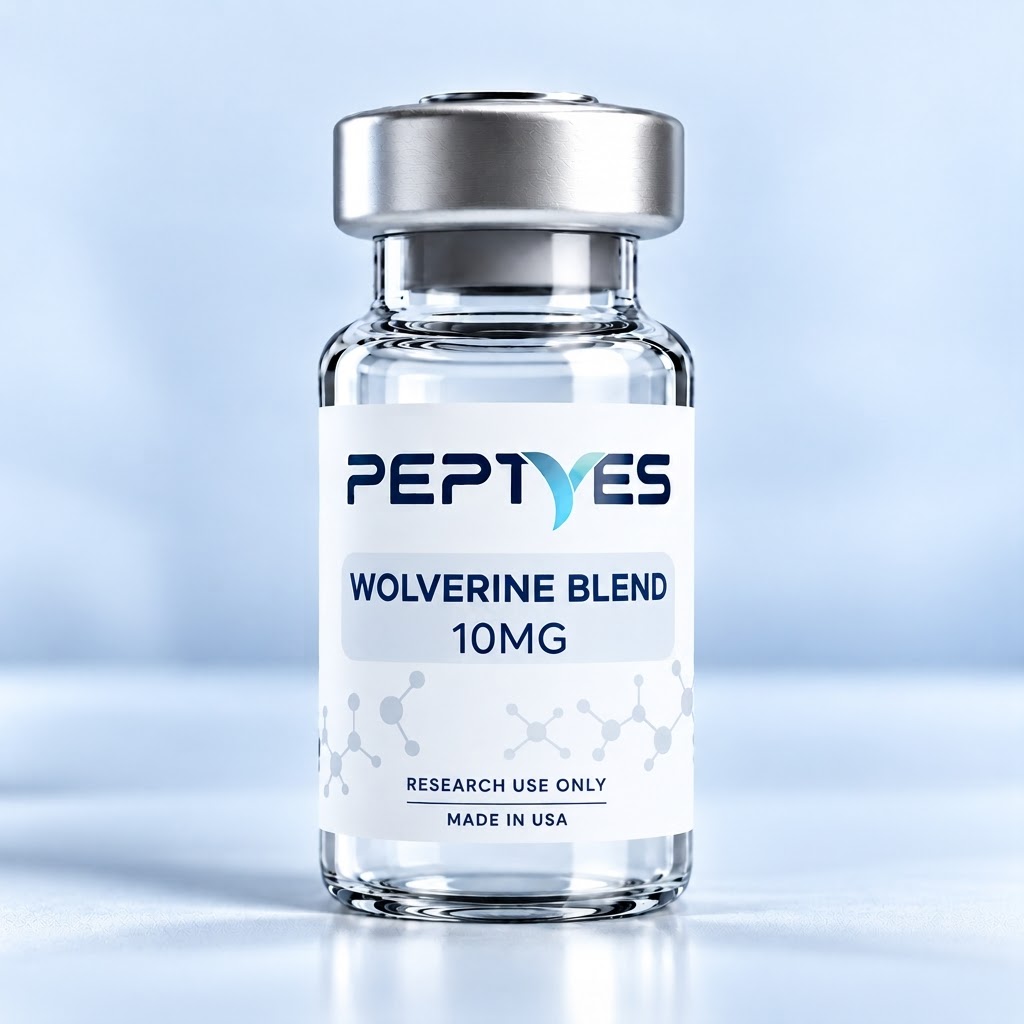
Overview
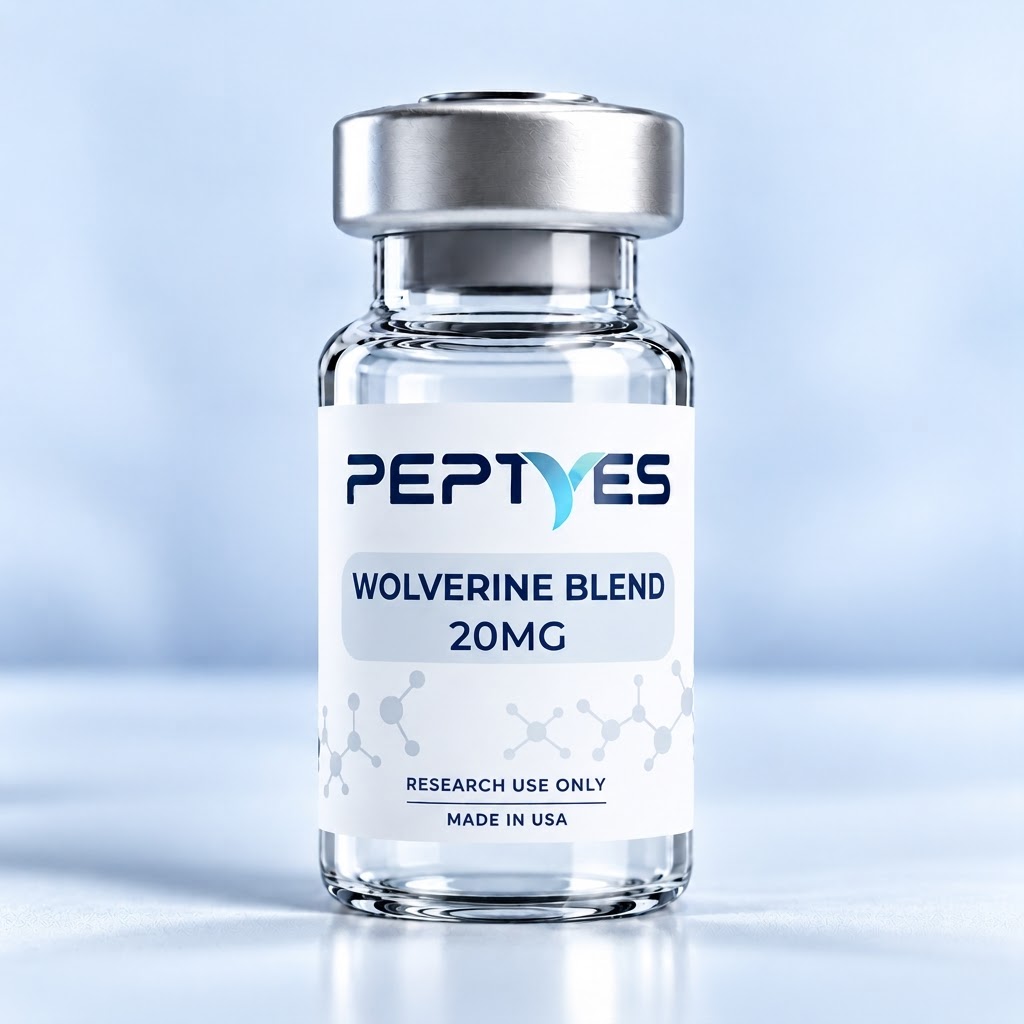
Wolverine Blend combines BPC-157 and TB-500 — two repair-signaling peptides with a long independent research history and, importantly, complementary rather than overlapping mechanisms. BPC-157 drives VEGF-dependent angiogenesis and growth factor signaling, while TB-500 operates through VEGF-independent integrin signaling plus actin-mediated cell migration. The blend exists so multi-pathway repair research can run from a single HPLC-verified preparation.
Mechanism of Action
In HUVEC tube formation assays and tendon repair models, co-application of the two peptides produces additive outcomes across concentration ranges — consistent with pharmacological complementarity rather than pathway redundancy. Histological analysis in tendon models shows greater improvement in collagen organization, cross-linking density, and vascularization under combination conditions than with either compound alone at equivalent concentrations, addressing successive phases of the tissue repair cascade simultaneously.
Specifications
- Purity: ≥99% (HPLC) with mass-spectrometry identity confirmation
- Form: Lyophilized powder, pre-blended
- Composition: BPC-157 + TB-500 (equal parts)
- CAS Numbers: BPC-157: 137525-51-0 · TB-500: 77591-33-4
- Molecular Weights: BPC-157: 1419.53 Da · TB-500: 4963.44 Da
Research Applications
- Multi-pathway tissue repair modeling
- Dual-mechanism angiogenesis research
- Collagen organization and remodeling studies
- Cell migration pathway research
- Synergy and additivity pharmacology