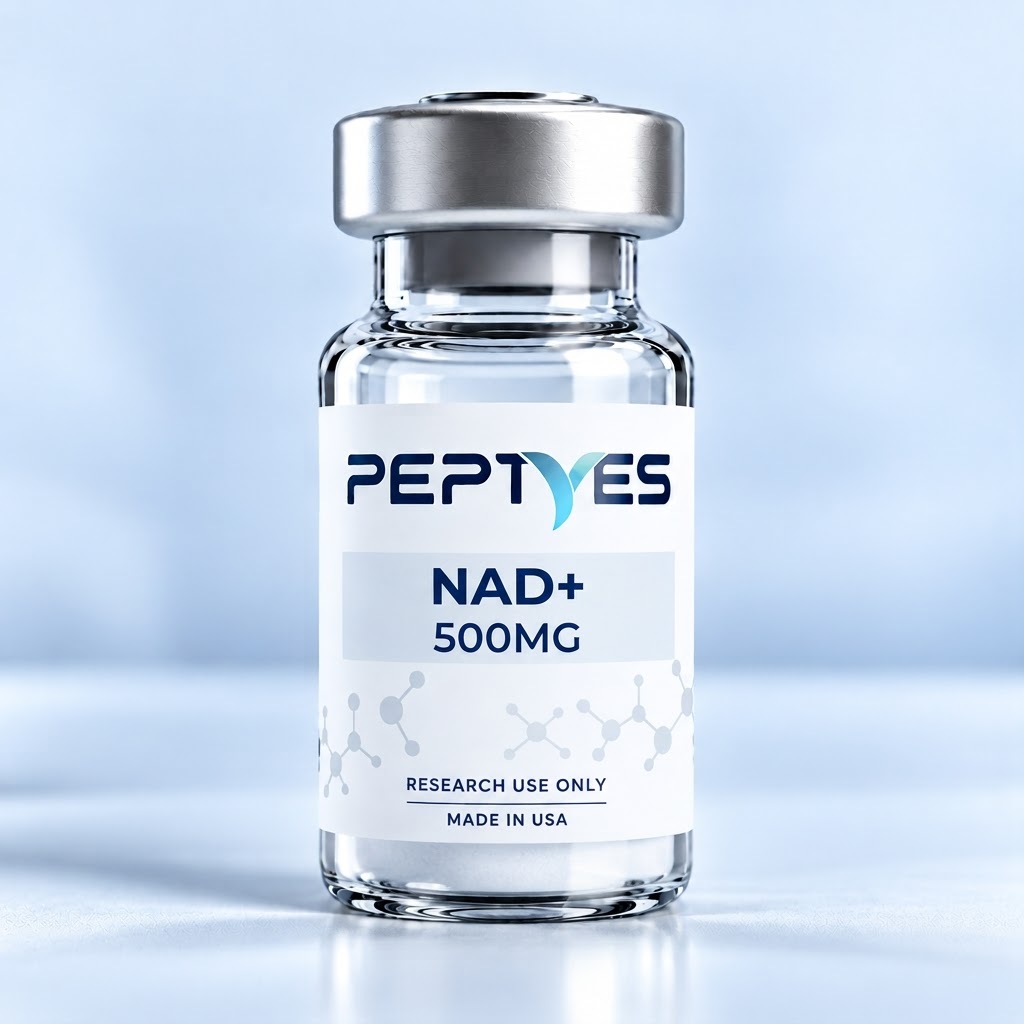
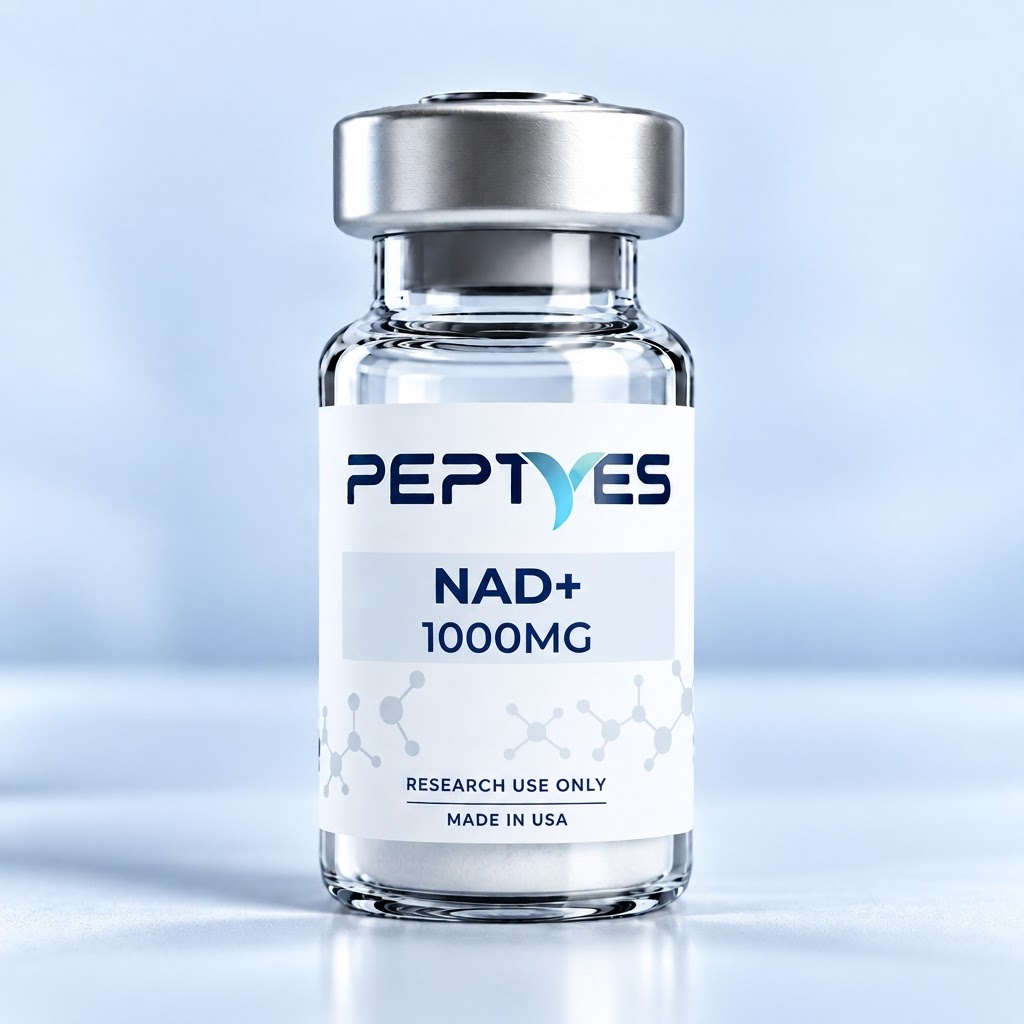
Overview
NAD+ occupies a rare dual position in cellular biochemistry: it is both the redox carrier shuttling electrons through energy metabolism and a signaling substrate whose concentration directly controls the activity of NAD+-consuming enzymes — sirtuins, PARPs, and CD38. This dual role makes it a foundational tool across mitochondrial bioenergetics, DNA damage response, epigenetic regulation, and aging pathway research.
Mechanism of Action
As a redox coenzyme, NAD+ accepts hydride equivalents during glycolysis, beta-oxidation, and the TCA cycle, cycling between NAD+ and NADH to deliver electrons to the electron transport chain for oxidative phosphorylation. As a co-substrate, it is consumed by sirtuin deacetylases during protein deacetylation — SIRT1 activity is kinetically sensitive to NAD+ availability at physiological concentrations — and by PARP enzymes during ADP-ribosylation at DNA damage sites, creating a competition for substrate under genotoxic stress. CD38, upregulated in aged tissue preparations, represents a third consumption pathway studied in age-associated NAD+ depletion models.
Specifications
- Purity: ≥99% (HPLC) with mass-spectrometry identity confirmation
- Form: Lyophilized powder
- CAS Number: 53-84-9
- Molecular Weight: 663.43 Da
- Chemical Formula: C₂₁H₂₇N₇O₁₄P₂
- Synonyms: Beta-NAD+, Coenzyme I, DPN
Research Applications
- Sirtuin kinetics and NAD+-dependent deacetylase studies
- Mitochondrial bioenergetics and oxidative phosphorylation
- PARP-mediated DNA repair research
- CD38 hydrolase and NAD+ depletion modeling
- Salvage pathway and biosynthesis studies
- Cellular aging and redox homeostasis models