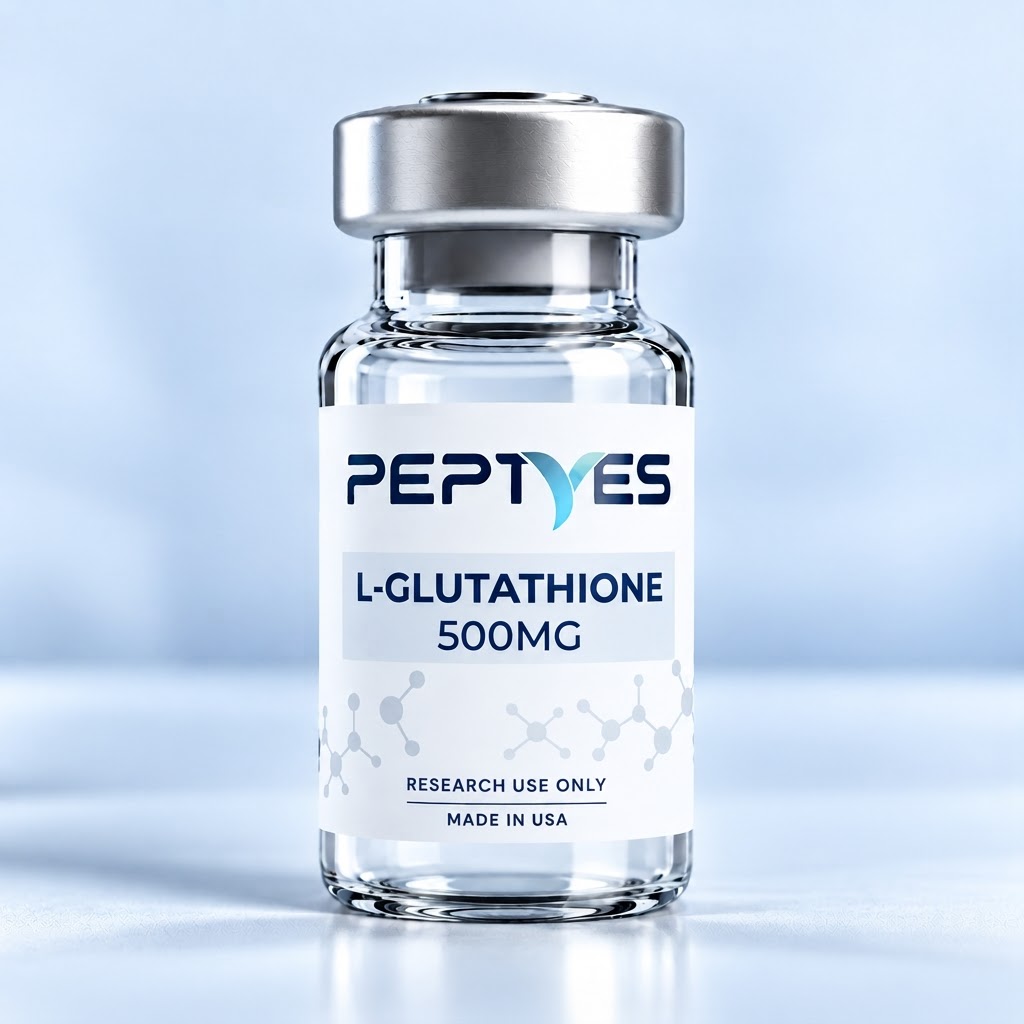
Overview
L-Glutathione is a tripeptide of cysteine, glycine, and glutamic acid, supplied here in its reduced form (GSH) — the cell's principal intracellular antioxidant and redox regulator. It is among the most studied small molecules in cell biology, serving both as a direct participant in antioxidant defense and as a standard laboratory reagent in protein purification workflows.
Mechanism of Action
GSH neutralizes reactive oxygen and nitrogen species by donating electrons through its free sulfhydryl group, converting to the oxidized disulfide GSSG — which glutathione reductase recycles back to GSH using NADPH, a redox cycle central to cellular oxidative stress models. It also serves as co-substrate for glutathione peroxidase and conjugates electrophilic compounds via GST enzymes in phase II detoxification research. In protein biochemistry, reduced glutathione elutes GST-tagged fusion proteins from immobilized resin at typical working concentrations of 10–40 mM.
Specifications
- Purity: ≥99% (HPLC) with mass-spectrometry identity confirmation
- Form: Lyophilized powder
- CAS Number: 170-18-8
- Molecular Weight: 307.32 g/mol
- Chemical Formula: C₁₀H₁₇N₃O₆S
- Synonyms: GSH, Reduced Glutathione
Research Applications
- Oxidative stress and redox biology modeling
- Phase II detoxification pathway studies
- GST-tagged protein purification workflows
- Antioxidant enzyme research
- Xenobiotic metabolism studies