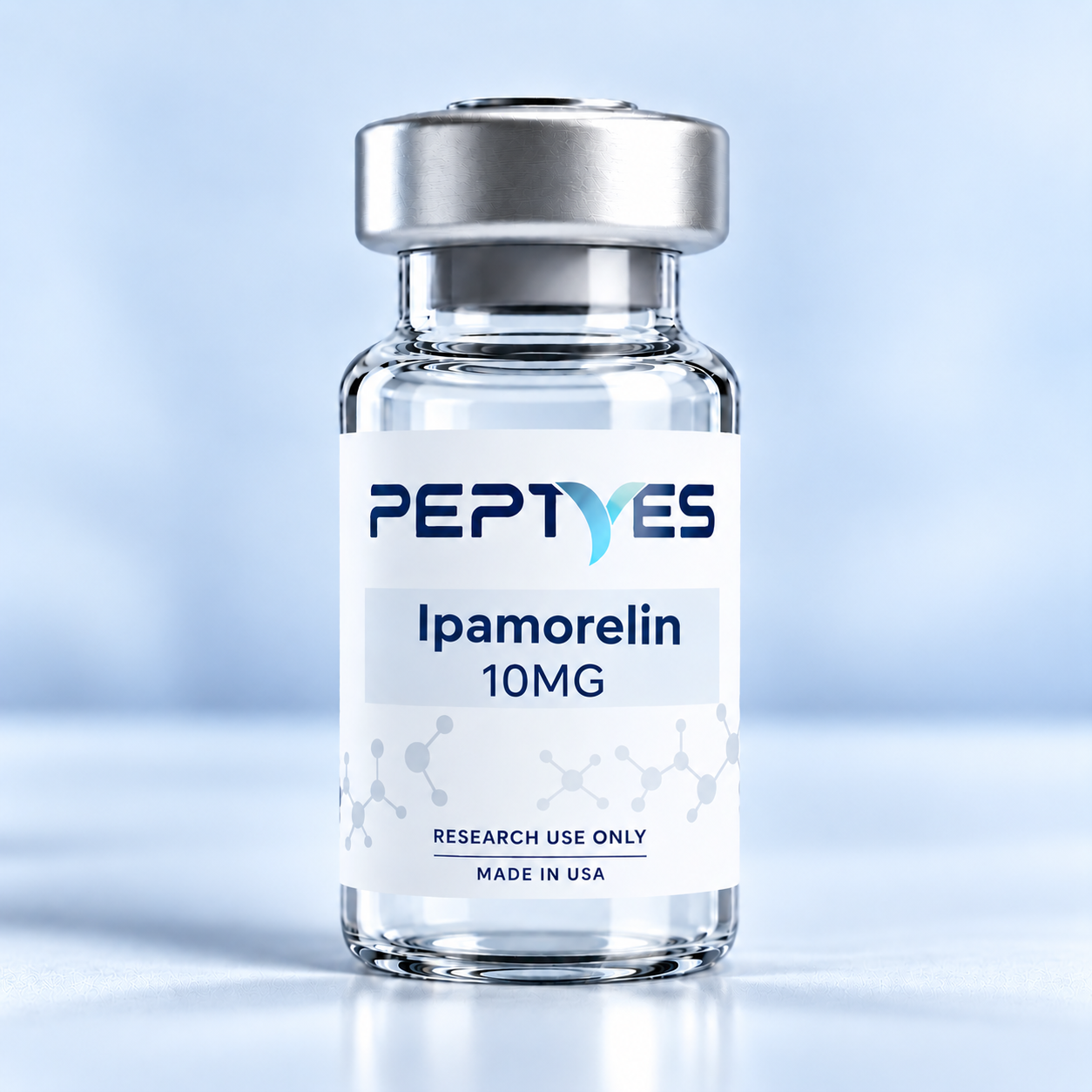
Overview
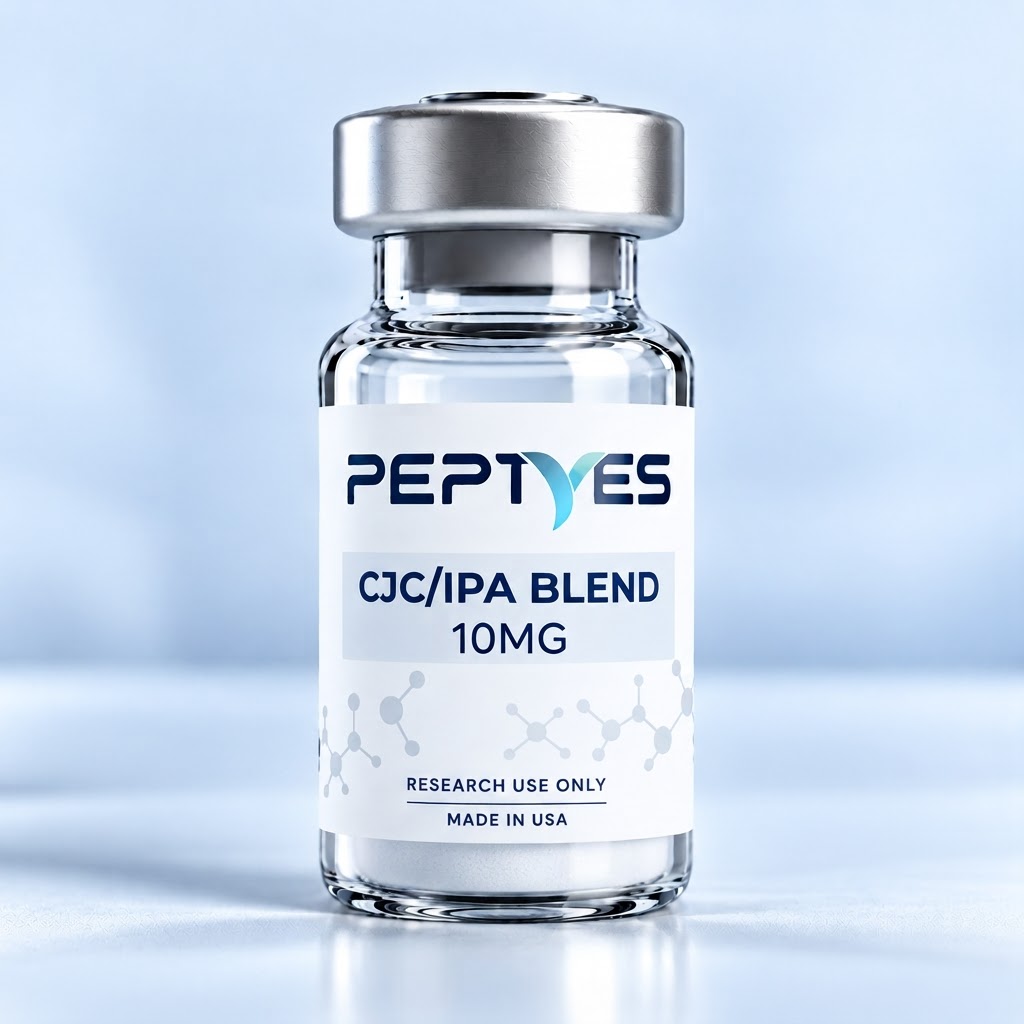
Ipamorelin belongs to the growth hormone-releasing peptide family but stands apart from earlier generations. Where compounds like GHRP-6 produce measurable off-target hormonal responses, Ipamorelin's activity is concentrated at GHS-R1a — the receptor subtype responsible for somatotroph GH release — with negligible engagement of receptor systems linked to adrenocortical and lactotroph signaling. That selectivity is its core research value: GHS-R1a signaling can be studied without a confounding hormonal background.
Mechanism of Action
Ipamorelin binds GHS-R1a, a Gq/11-coupled receptor on pituitary somatotroph cells, activating phospholipase C, IP3-mediated intracellular calcium release, and PKC signaling — a calcium-dependent exocytosis route distinct from the cAMP/PKA pathway of GHRH analogs. In longer-duration preclinical models it raises GH pulse amplitude and mean 24-hour GH concentration without altering pulse frequency, a physiologically patterned secretion profile. Co-application with GHRH analogs produces well-characterized synergistic GH output.
Specifications
- Purity: ≥99% (HPLC) with mass-spectrometry identity confirmation
- Form: Lyophilized powder
- CAS Number: 170851-70-4
- Molecular Weight: 711.85 Da
- Chemical Formula: C₃₈H₄₉N₉O₅
- Synonyms: NNC 26-0161, Ipamorelin acetate
Research Applications
- GHS-R1a selectivity and receptor binding studies
- GH pulse amplitude and pulsatility modeling
- Off-target hormonal selectivity profiling
- Dual-secretagogue combination protocols
- GHRP comparative potency benchmarking