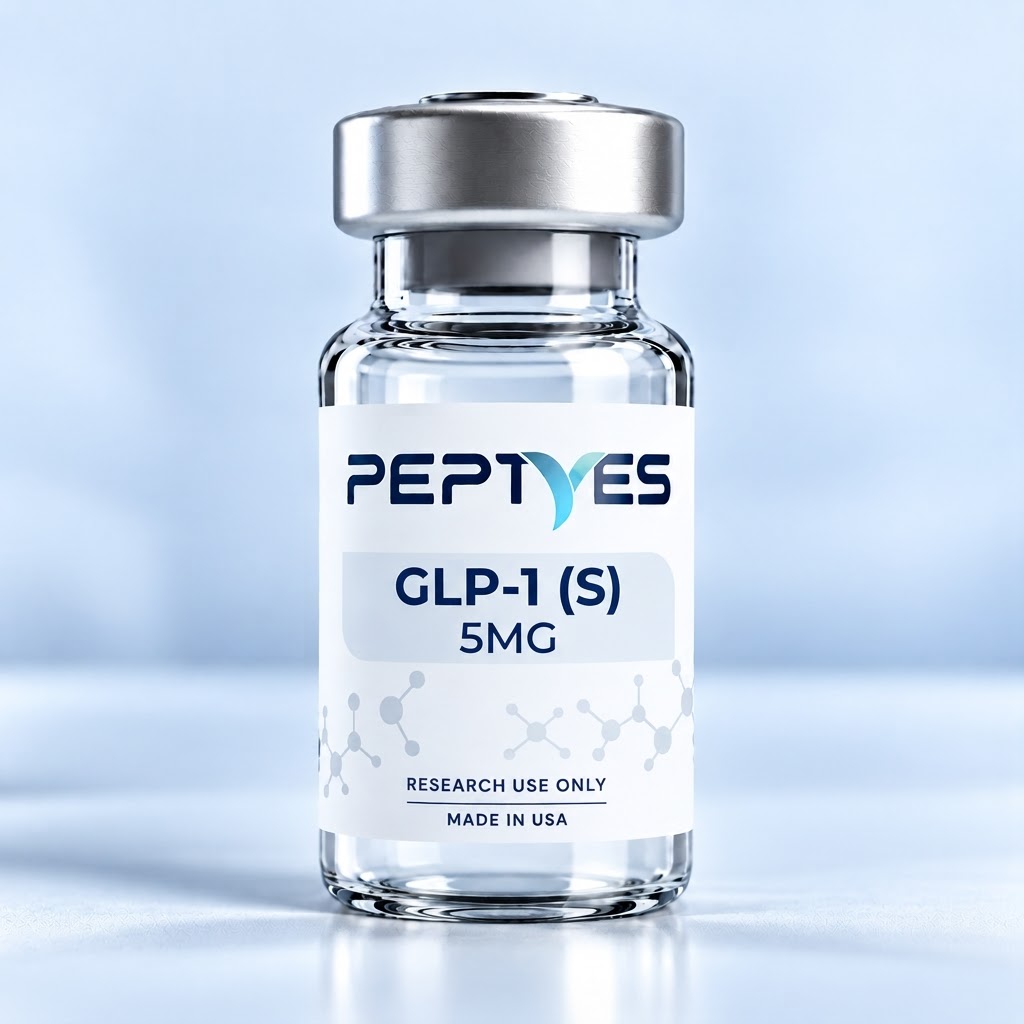
Overview
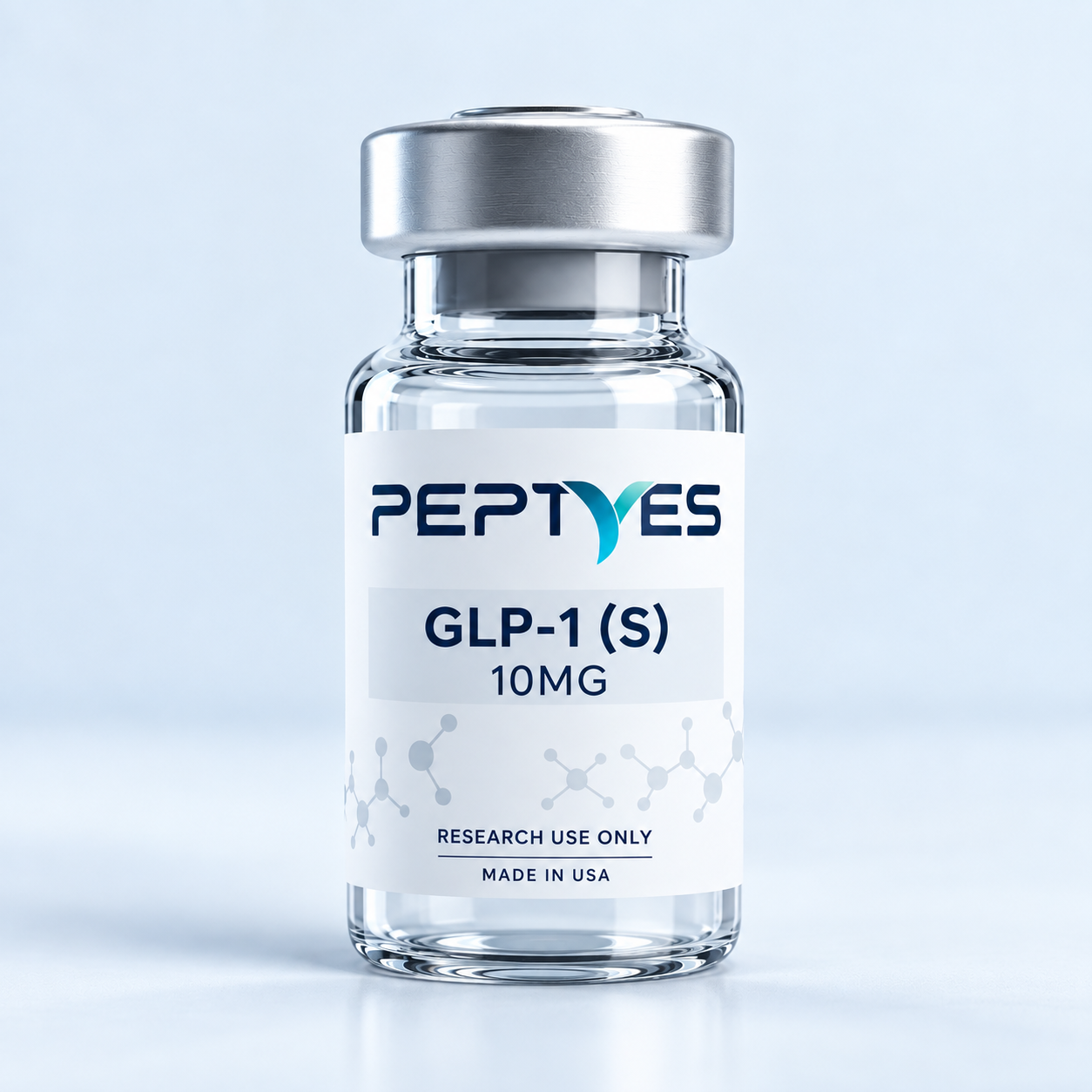
GLP-1 belongs to the glucagon peptide superfamily and is released from intestinal L-cells following nutrient exposure. Its defining research feature is the glucose-dependent nature of its insulinotropic activity: receptor activation alone does not trigger insulin release unless sufficient glucose is present — a built-in signaling gate that makes it a precise, controllable tool for pancreatic beta-cell biology.
Mechanism of Action
GLP-1(7-36) amide binds GLP-1R and activates adenylyl cyclase through Gs coupling, raising intracellular cAMP within seconds at physiological concentrations; downstream PKA activity closes KATP channels and opens L-type calcium channels, triggering insulin granule exocytosis in beta-cell preparations — but only above glucose concentrations of roughly 5.5 mM, confirming the glucose-gated mechanism. Glucagon suppression operates through a separate paracrine route: GLP-1 stimulates delta-cell somatostatin release, which suppresses alpha-cell glucagon output via somatostatin receptor 2 signaling. Its short active half-life also makes it a useful comparator when benchmarking longer-acting GLP-1R agonist analogs.
Specifications
- Purity: ≥99% (HPLC) with mass-spectrometry identity confirmation
- Form: Lyophilized powder
- CAS Number: 107444-51-9
- Molecular Weight: 3297.68 Da
- Chemical Formula: C₁₄₉H₂₂₅N₄₃O₄₇
- Synonyms: GLP-1(7-36) amide, Incretin hormone
Research Applications
- GLP-1R characterization and binding studies
- Glucose-dependent insulin signaling research
- Paracrine somatostatin-mediated glucagon suppression
- Appetite and hypothalamic signaling models
- Beta-cell exocytosis modeling
- GLP-1R agonist benchmarking