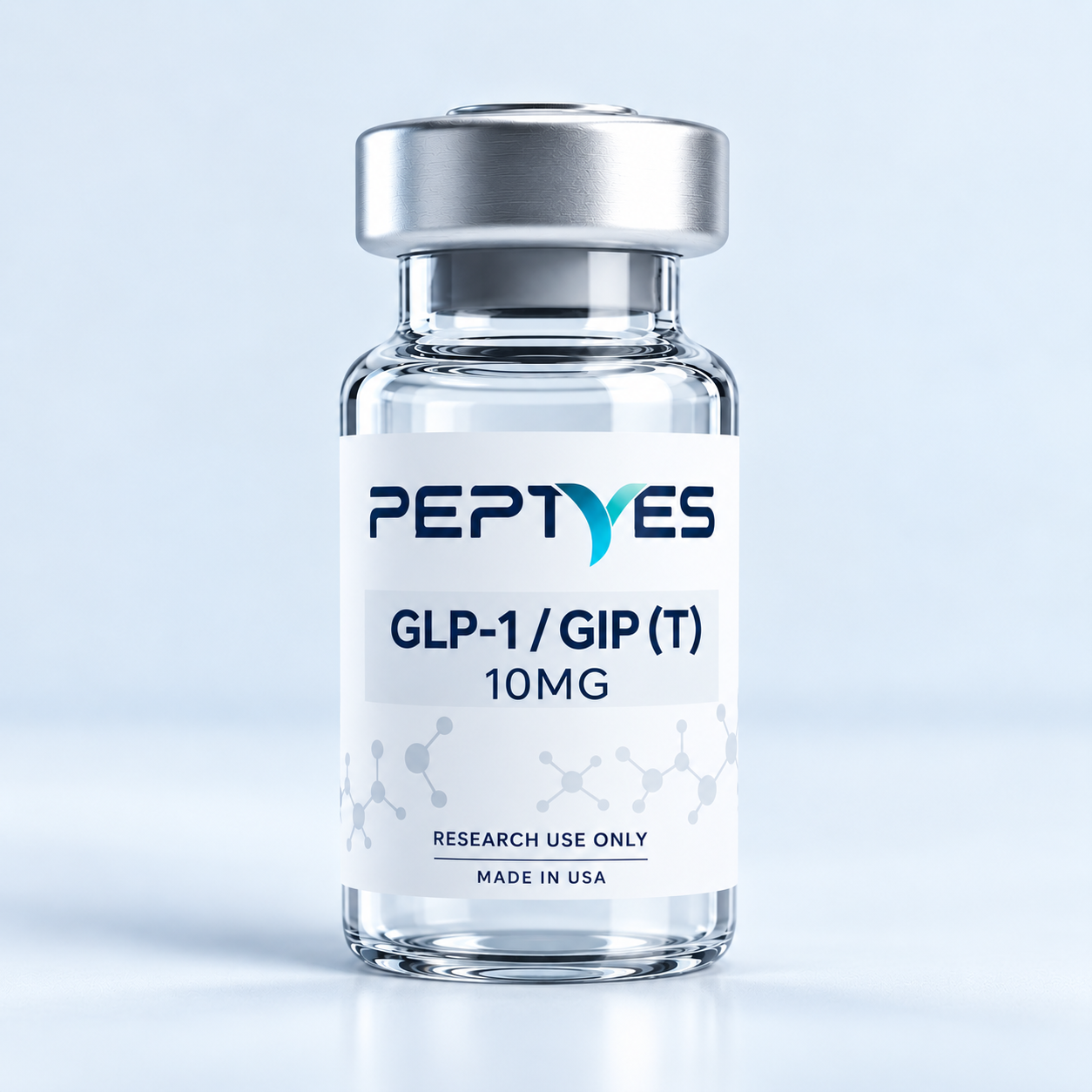
Overview
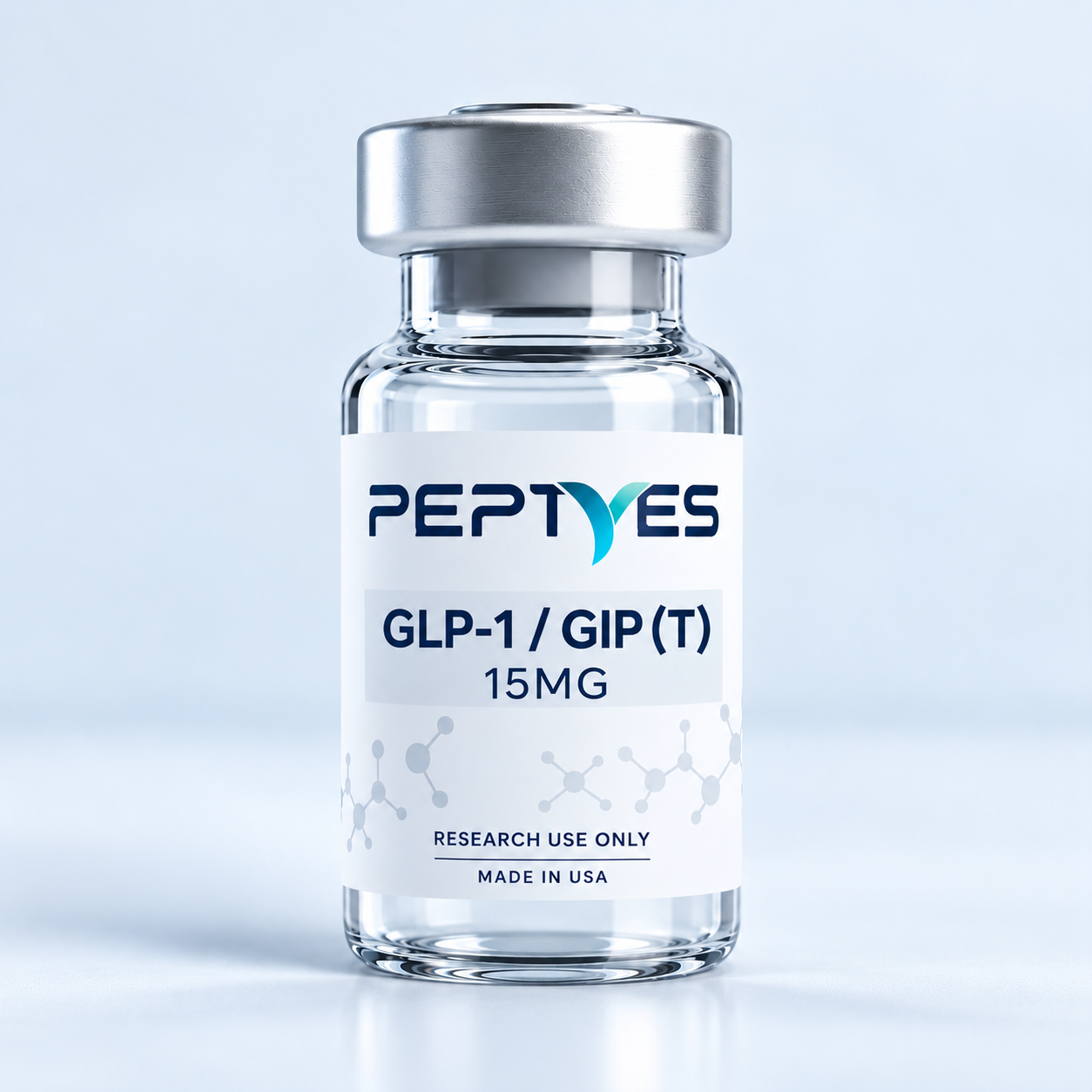
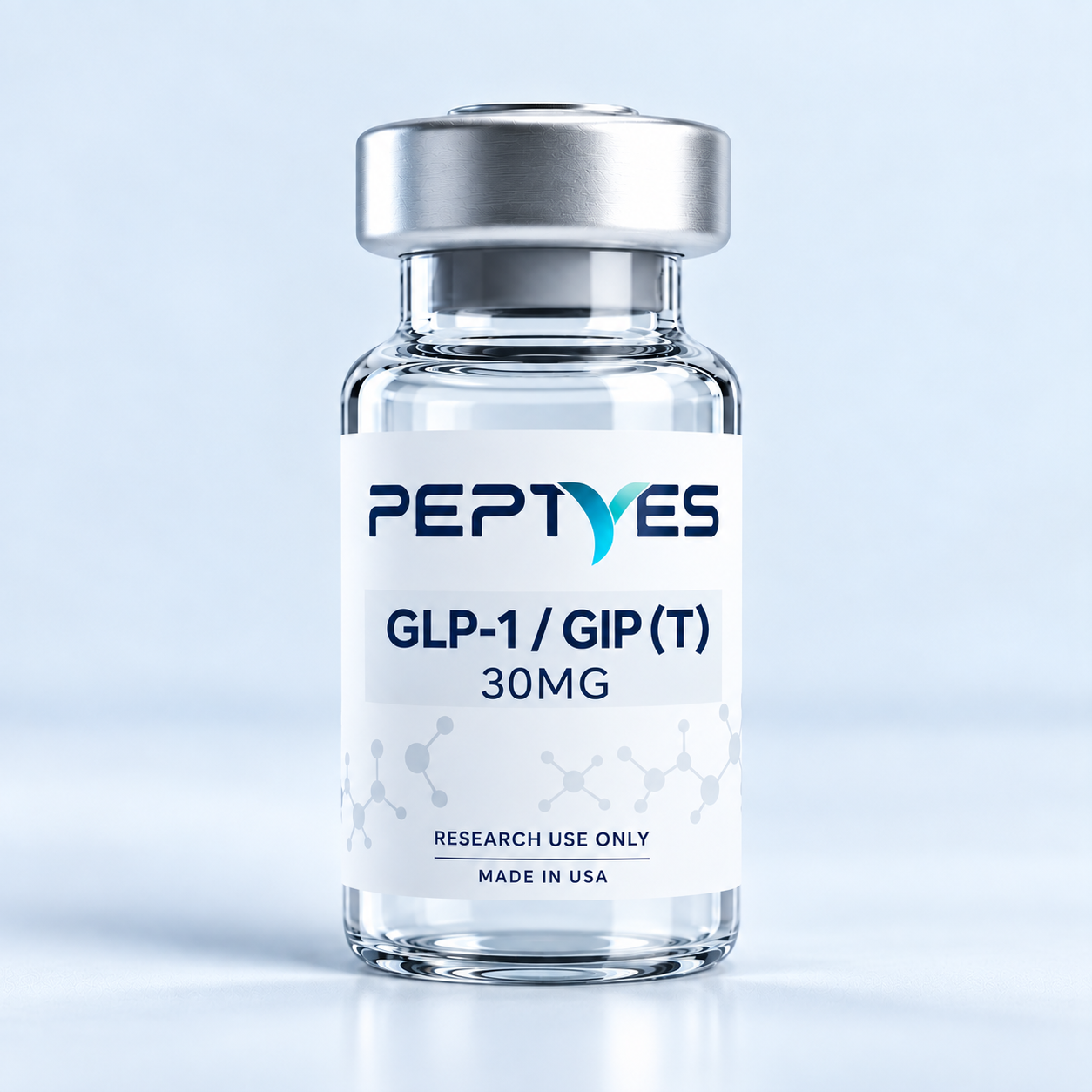
This GLP-1 T-class compound belongs to the dual incretin receptor agonist class, built on the observation that GIP and GLP-1 — the two primary incretin hormones — operate through complementary but distinct signaling pathways. Engaging both simultaneously produces measurably different downstream outcomes in laboratory models than either pathway alone, and the compound also raises adiponectin in adipocyte preparations, adding a third dimension beyond pancreatic incretin biology.
Mechanism of Action
At GIPR, the compound mimics native GIP with comparable affinity, activating Gs-coupled adenylyl cyclase and cAMP accumulation in beta-cell preparations. At GLP-1R, its biased agonism preferentially drives cAMP synthesis over beta-arrestin recruitment — a signaling preference believed to underlie the enhanced insulinotropic response seen in dual-receptor activation models relative to GLP-1-only preparations. Combined GIPR and GLP-1R engagement produces synergistic insulin secretion signaling and glucagonostatic activity in islet preparations exceeding either receptor pathway in isolation.
Specifications
- Purity: ≥99% (HPLC) with mass-spectrometry identity confirmation
- Form: Lyophilized powder
- CAS Number: 2023788-19-2
- Molecular Weight: 4813.5 g/mol
- Chemical Formula: C₂₂₅H₃₄₈N₄₈O₆₈
- Synonyms: GLP-1 T-class, LY3298176, dual incretin agonist
Research Applications
- Dual incretin receptor biology
- Biased agonism and cAMP/beta-arrestin preference
- Insulin secretion pathway studies
- Glucagonostatic signaling research
- Adipokine and lipid metabolism studies
- Incretin synergy modeling