Overview
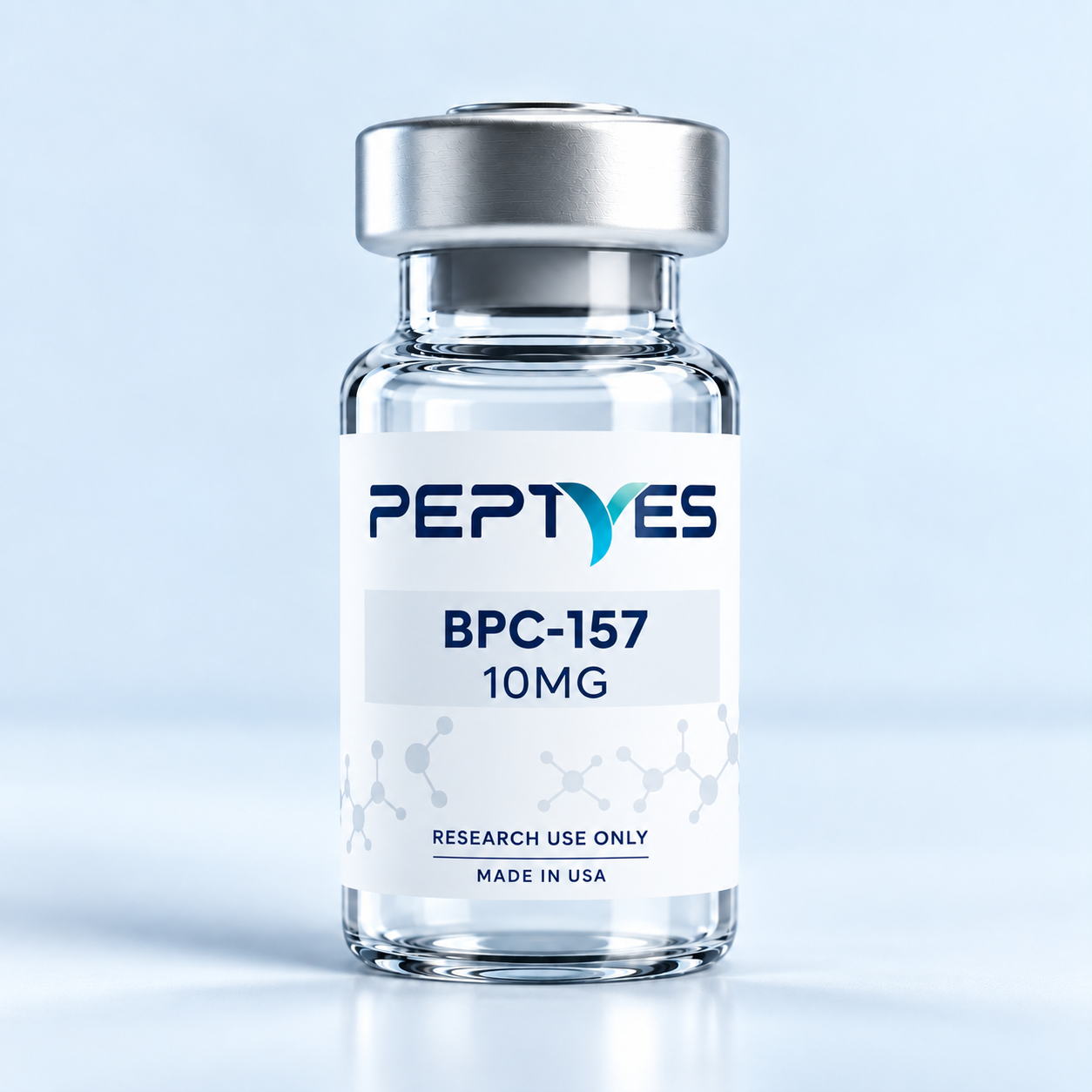
BPC-157 is a synthetic 15-amino-acid peptide derived from a protective gastric protein, with a research profile spanning nitric oxide modulation, growth factor induction, and cell adhesion signaling. What sets it apart is the breadth of its tissue applicability: the same core mechanisms have been characterized in gastrointestinal mucosal, tendon, ligament, endothelial, and neural preparations, making it a versatile reference compound across regenerative research disciplines.
Mechanism of Action
BPC-157 engages the nitric oxide system as a primary pathway — modulating eNOS activity and NO bioavailability in vascular and mucosal preparations, with associated cytoprotective and vasodilatory signaling. A second arm involves concentration-dependent upregulation of VEGF and EGF at wound sites, driving angiogenesis through VEGFR2 phosphorylation and downstream FAK activation — a VEGF-dependent route that distinguishes it from VEGF-independent angiogenic compounds. In tendon models, Western blot analysis confirms concentration-dependent FAK and paxillin phosphorylation, with histology showing improved collagen organization.
Specifications
- Purity: ≥99% (HPLC) with mass-spectrometry identity confirmation
- Form: Lyophilized powder
- CAS Number: 137525-51-0
- Molecular Weight: 1419.53 Da
- Chemical Formula: C₆₂H₉₈N₁₆O₂₂
- Synonyms: Body Protection Compound 157, PL-10, Bepecin
Research Applications
- Nitric oxide modulation and cytoprotection studies
- VEGFR2-mediated angiogenesis research
- Gastrointestinal mucosal repair models
- Tendon and connective tissue repair signaling
- Collagen organization and ECM remodeling assays
- Complementary angiogenic pathway combination studies