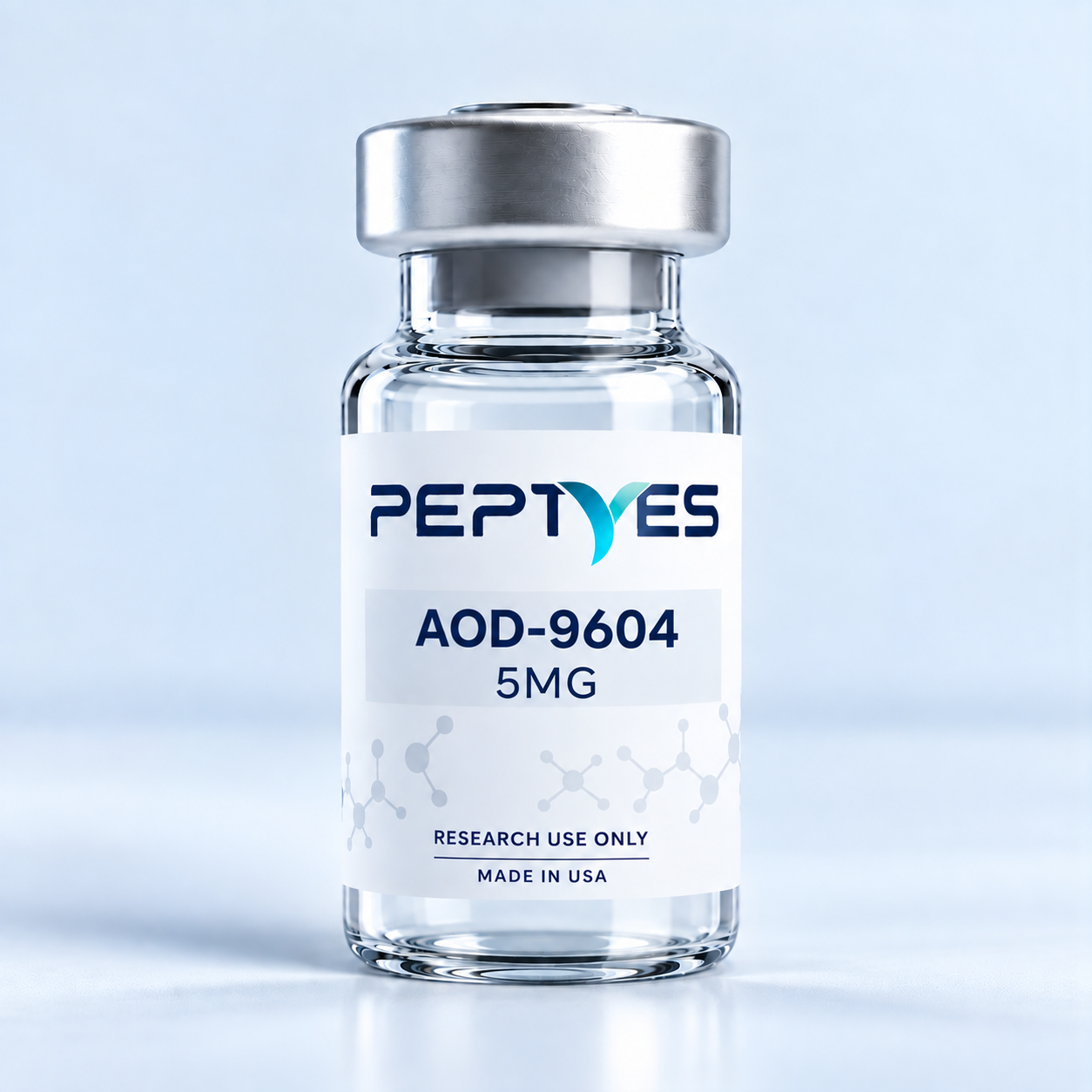
Overview
AOD-9604 is a modified fragment comprising residues 176-191 of the human growth hormone C-terminal domain, built to isolate the region responsible for lipolytic signaling while excluding the receptor-binding domains that drive IGF-1 elevation and anabolic GH signaling in full-length hGH. This pharmacological separation lets researchers study fat metabolism pathways in isolation from the broader GH axis.
Mechanism of Action
In adipose tissue preparations, AOD-9604 activates hormone-sensitive lipase and stimulates fatty acid release at concentrations at which no full-length GH receptor binding is observed — a dissociation that makes it a selective probe for GH-independent lipolytic research, with no measurable effect on blood glucose markers or lean tissue metabolism in those models. Separately, human osteoarthritic cartilage explant studies have identified a second research application: inhibition of IL-1β-induced MMP-3 and MMP-13 production and reduced aggrecan breakdown, an anti-catabolic signaling profile in chondrocyte preparations.
Specifications
- Purity: ≥99% (HPLC) with mass-spectrometry identity confirmation
- Form: Lyophilized powder
- CAS Number: 221231-10-3
- Molecular Weight: 1815.08 Da
- Chemical Formula: C₇₈H₁₂₃N₂₃O₂₃S₂
- Synonyms: hGH Fragment 176-191
Research Applications
- Lipolytic pathway and HSL activation research
- GH-independent signaling studies
- Adipose tissue biology models
- Cartilage and MMP inhibition research
- GH fragment pharmacology